Let’s be honest — for a lot of people, going to the dentist isn’t exactly something they look forward to. In fact, research from the Journal of the American Dental Association shows that nearly 73% of U.S. adults feel some degree of fear or anxiety about it.
If you’re one of them, here’s the part most people don’t know: you can actually make it feel a lot better with some simple preparation.
This guide gives you clear, easy steps to help calm your nerves, avoid last-minute stress, and feel genuinely ready when you walk through the door — whether it’s your first visit in years or just your regular check-up.
Why Preparing for Your Dental Appointment Matters
Going to the dentist without any preparation is like showing up to a job interview without a resume. You might still get through it, but things go much smoother when you’re ready.
When you prepare before your visit, you:
- Help your dentist understand your full health history
- Avoid delays caused by missing paperwork or insurance cards
- Get more out of your appointment by remembering your questions
- Feel less anxious because you know exactly what to expect
- Reduce the risk of treatment mistakes due to unknown medication interactions
Regular dental visits are also one of the most important things you can do for your overall health. The American Dental Association (ADA) recommends visiting your dentist at least every six months, even if your teeth feel fine. Many serious dental problems like gum disease and early tooth decay have no pain at first. Catching them early saves you time, money, and discomfort.
Step-by-Step Guide: Preparing for Your Dental Appointment
Step 1: Confirm Your Appointment
This sounds simple, but it matters. Call or check your text or email reminders to confirm the date, time, and location of your appointment. Missing or confusing an appointment time is one of the most common problems patients face.
At Stone Creek Village Dentistry, our team sends reminder messages ahead of your visit. But if you haven’t heard from us, don’t hesitate to call us at (831) 920-6900 to confirm. We’re located at 463 Canyon Del Rey Blvd, Del Rey Oaks, CA 93940, and we’re always happy to help.
Step 2: Gather Your Important Documents
Before your appointment day, collect these key items:
- Dental insurance card – This helps the front desk process your coverage faster. If your insurance changed recently, bring proof of the new plan.
- A valid photo ID – A driver’s license or government-issued ID works well.
- List of current medications – Include the name, dose, and how often you take each one. Some medications affect your oral health or may interact with dental treatments like anesthesia.
- Medical history updates – If you’ve been diagnosed with a new health condition like diabetes, high blood pressure, or a thyroid issue since your last visit, let your dentist know. These conditions can directly affect your dental care.
- Previous dental records – If you’re a new patient or recently switched dentists, bring X-rays or records from your last dental office if you have them.
Pro Tip for New Patients: You can often fill out new patient forms online before your visit. This saves time in the waiting room and helps you think carefully about your health history without feeling rushed.
Step 3: Keep Up Your Oral Hygiene Routine
In the days before your appointment, focus on your daily brushing and flossing routine. The ADA recommends brushing your teeth twice a day for at least two minutes and flossing at least once a day.
On the morning of your appointment:
- Brush and floss your teeth before you leave. This helps your dentist examine your teeth more clearly and shows good home care habits.
- Avoid eating a heavy meal right before your appointment. A light meal is fine. If you’re getting a procedure that requires sedation, your dentist may ask you not to eat for a certain period beforehand — always follow those instructions.
- Skip strong-smelling foods like garlic or onions the day of your visit, as a courtesy to your dental team.
- Avoid smoking or vaping for at least a few hours before your appointment if possible.
Step 4: Write Down Your Questions and Concerns
Before the appointment, take five minutes to jot down:
- Any tooth pain, sensitivity, or soreness you’ve noticed
- Changes in your gums — like bleeding, swelling, or pulling away from teeth
- Any cosmetic concerns, like teeth whitening or straightening options
- Questions about your current oral hygiene tools (toothbrush type, toothpaste, mouthwash)
- Questions about the cost of any treatments you’ve been told you need
People sometimes forget their questions once they’re in the dental chair. Writing them down means you get everything answered and leave the office fully informed.
Step 5: Plan to Arrive Early
Arriving 10 to 15 minutes before your scheduled time is a good rule of thumb. This gives you time to:
- Fill out or update paperwork, especially if you’re a new patient
- Verify your insurance information with the front desk
- Mentally relax and settle in before the appointment begins
Rushing into the office at the last second adds unnecessary stress to what might already be a nerve-wracking experience. Giving yourself that extra buffer time makes everything calmer.
Step 6: Tell the Office About Dental Anxiety
If you feel anxious about dental visits, you are far from alone. A 2025 JADA study found that 72.6% of U.S. adults report some level of dental fear, with nearly 27% describing it as severe. This is a real and recognized health issue — not something to be embarrassed about.
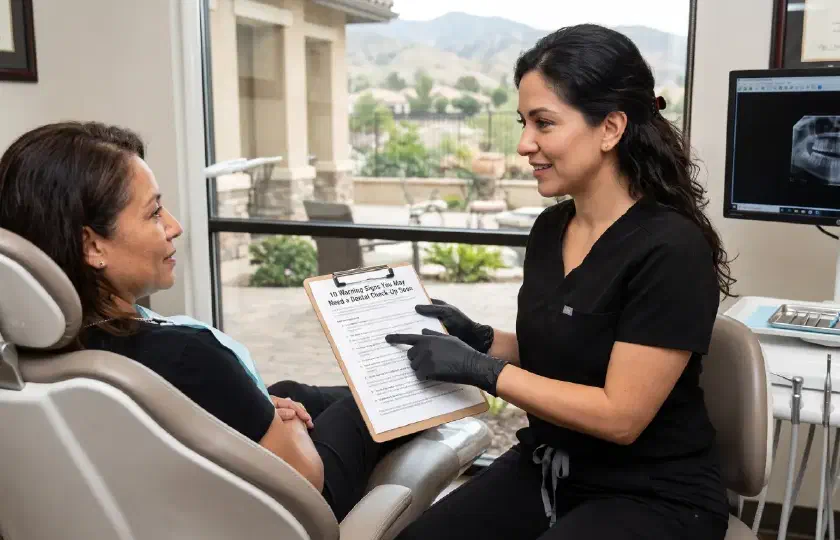
When you call to confirm your appointment, let our team know if you feel nervous. At Stone Creek Village Dentistry, we understand dental anxiety deeply and will work with you to make your visit as comfortable as possible. Some options we may offer include:
- Taking extra time to explain each step before we do it
- Short breaks during procedures when needed
- Distraction techniques like music
- Sedation options for those with significant anxiety (ask about this when booking)
Deep breathing exercises before and during your visit can also help. Try breathing in slowly for 4 counts, holding for 4 counts, and breathing out for 4 counts. This simple method can calm your nervous system quickly.
Step 7: Arrange Transportation If Needed
If your appointment involves sedation or a longer procedure like a tooth extraction or dental implant placement, you should plan for a ride home in advance. Sedation can affect your reaction time and judgment, making it unsafe to drive.
Ask a friend or family member to accompany you, or arrange a rideshare ahead of time. Let the dental office know when you book so they can give you the right instructions.
What to Expect During Your Dental Appointment
Knowing what happens during your visit can make the whole experience feel less intimidating. Here’s a general overview:
- Check-In – The front desk will verify your insurance and have you update any paperwork.
- Medical History Review – Your hygienist or dentist will ask about any health changes, new medications, and concerns since your last visit.
- X-Rays (if needed) – Modern dental X-rays use very low radiation and are completely safe. They help your dentist see what’s happening below the surface.
- Professional Cleaning – A dental hygienist will remove built-up plaque and tartar that brushing and flossing can’t reach at home.
- Dental Exam – Your dentist will check your teeth, gums, bite, and mouth for any signs of decay, gum disease, or other issues. An oral cancer screening is often included.
- Treatment Discussion – Your dentist will explain any findings and discuss treatment options with you — including costs.
Most routine appointments last 60 to 90 minutes. If you need specific treatments, follow-up visits may be scheduled.
Important Questions to Ask Your Dentist
A great dental visit is a two-way conversation. Don’t leave without asking:
- “How is the overall health of my teeth and gums right now?”
- “Am I brushing and flossing correctly?”
- “Do I need any treatments, and what’s the priority?”
- “Does my insurance cover any of the recommended treatments?”
- “What can I do at home to improve my oral health before the next visit?”
- “How often should I be coming in for check-ups based on my situation?”
Your dentist is your partner in oral health. The more you communicate, the better care you’ll receive.
After Your Appointment: What to Do Next
Your dental appointment doesn’t end when you leave the office. Here’s how to follow through:
- Follow post-appointment instructions carefully, especially if you had a filling, extraction, or cleaning with deeper scaling.
- Schedule your next visit before you leave the office. Most people benefit from a check-up every six months.
- Start or improve your home care routine based on your dentist’s feedback.
- Check your insurance explanation of benefits (EOB) when it arrives, and review what was covered.
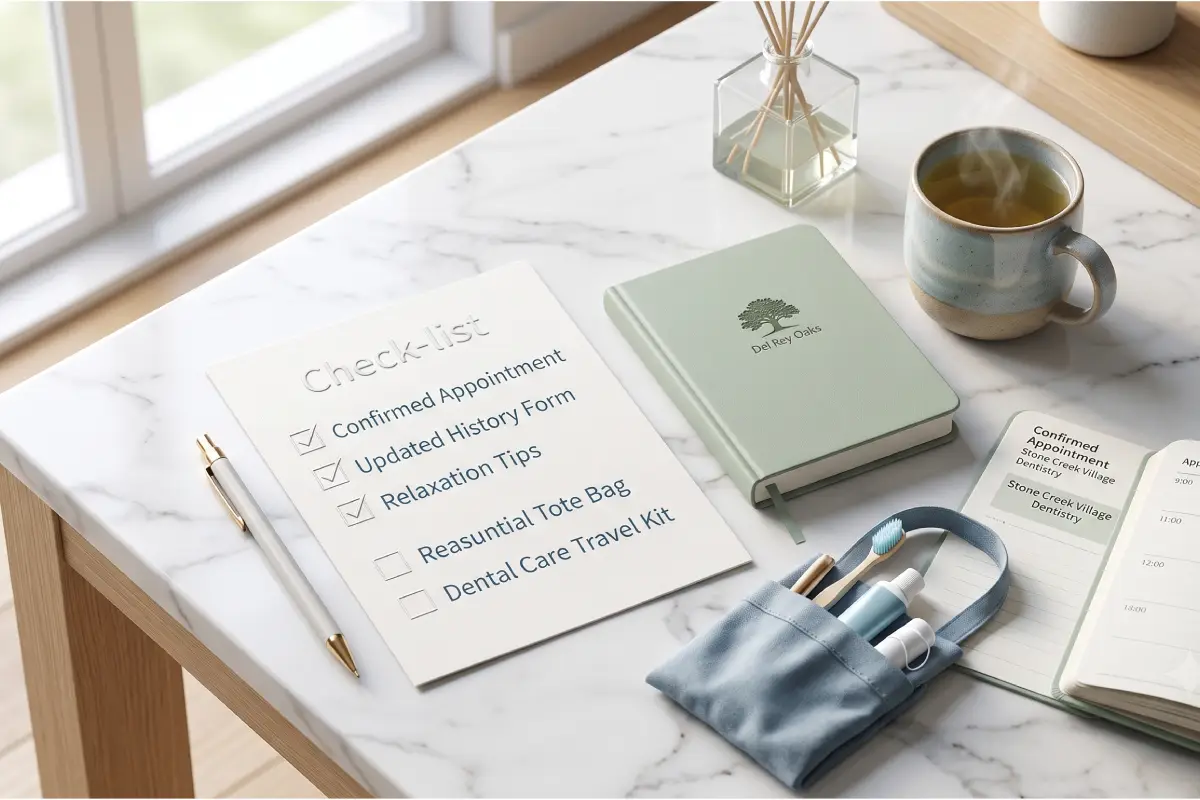
Download the Dental Appointment Preparation Checklist
Visit Us at Stone Creek Village Dentistry
Whether you’re coming in for a routine check-up, a cleaning, or you need to address a specific concern, our team at Stone Creek Village Dentistry is here to make your visit smooth, comfortable, and positive. We serve patients in Del Rey Oaks, Monterey, and the surrounding communities of California’s Central Coast.
Ready to book your next appointment? Contact us today — we’re accepting new patients and would love to be your dental home in Del Rey Oaks, CA.
This article is for informational purposes only and is not a substitute for professional dental advice. Please consult a licensed dentist for personalized guidance on your oral health.
Stone Creek Village Dentistry | 463 Canyon Del Rey Blvd, Del Rey Oaks, CA 93940 | (831) 920-6900