You just left the dentist with the smoothest teeth you’ve had in months. Now here’s what really matters: What you do over the next 48 hours can either protect that clean feeling or undo it faster than you think. Most people have no idea how much impact these first two days actually have.
This guide shows you exactly how to care for your mouth after a dental cleaning so your results last longer.
What Happens During a Dental Cleaning?
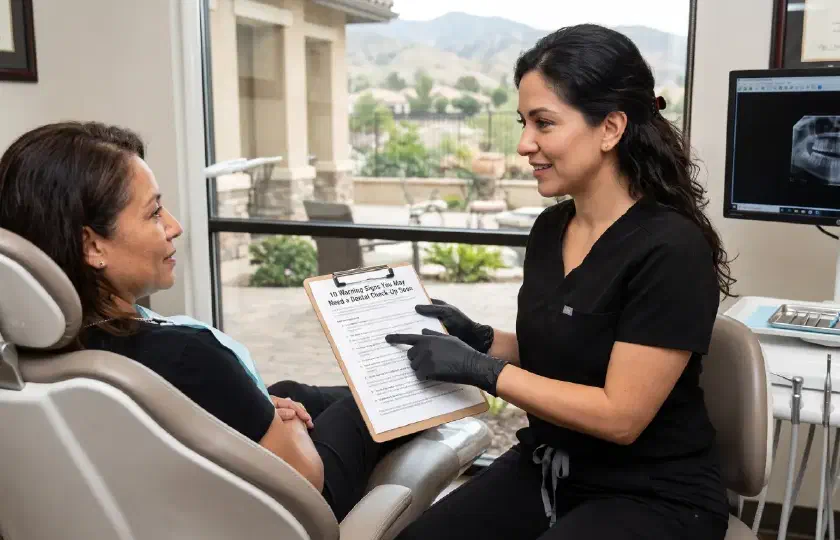
Before diving into aftercare, it helps to know what your hygienist actually did during your appointment. A professional dental cleaning — also called dental prophylaxis — is much deeper than what your toothbrush can do at home.
During your cleaning, your dental hygienist:
- Removes plaque and tartar (hardened plaque) from the surfaces of your teeth and along the gumline using specialized tools
- Polishes your teeth with a gritty paste to buff away surface stains
- Flosses between every tooth to remove any remaining debris
- Applies a fluoride treatment in many cases, to strengthen your enamel and protect against cavities
- Performs a dental exam so your dentist can spot any problems early
Because this process goes deeper than your at-home routine, your gums and enamel may feel a bit more sensitive than usual afterward. That’s completely normal — and it’s exactly why aftercare matters.
Why Dental Cleaning Aftercare Is So Important
Here’s something many patients don’t realize: the 24–48 hours after your dental cleaning are a critical window. Right after cleaning, the thin protective layer on your teeth (called the pellicle) has been temporarily removed, which can make your enamel slightly more vulnerable to staining and sensitivity.
Additionally, if your hygienist applied a fluoride varnish, it needs time to fully bond with your enamel. Eating or drinking too soon can wash it away before it does its job — which means less cavity protection for you.
Skipping proper aftercare can lead to:
- Faster plaque and tartar buildup
- Gum inflammation or irritation
- New staining on freshly polished teeth
- Reduced effectiveness of your fluoride treatment
The good news? Taking care of your mouth after a cleaning is simple. Here’s exactly what to do.
The First 30 Minutes After Your Dental Cleaning
Wait Before You Eat or Drink
If you received a fluoride treatment during your cleaning — and most patients do — wait at least 30 minutes before eating or drinking anything. Some dentists recommend waiting up to an hour for maximum fluoride absorption.
If no fluoride was applied, you can generally eat right away. But your gums and teeth may still be tender, so it’s still smart to start with something gentle.
Quick Tip from Stone Creek Village Dentistry: Not sure if you had a fluoride treatment? Just ask your hygienist before you leave. They will always tell you exactly what was done and how long to wait.
Drink Water First
Water is your best friend right after a dental cleaning. It helps rinse away any leftover residue from the cleaning, keeps your mouth hydrated, and helps stimulate saliva — your mouth’s natural defense against bacteria. Plain water is safe to drink almost immediately after your appointment.
Eating After a Dental Cleaning: What’s Safe and What to Skip
Best Foods to Eat After a Dental Cleaning
Once the waiting period is over, choose soft, mild foods that won’t stress your freshly cleaned teeth and tender gums. Good options include:
- Plain yogurt — soft, cool, and tooth-friendly
- Scrambled eggs — easy to chew with no hard edges
- Oatmeal or cream of wheat — gentle and nutritious
- Mashed potatoes — smooth and easy on sensitive gums
- Soup or broth — lukewarm, not piping hot
- Applesauce or soft fruits — easy to chew, low in acidity
- Smoothies — a great option if chewing feels uncomfortable
Foods and Drinks to Avoid After a Dental Cleaning
Certain foods and drinks can irritate your freshly cleaned mouth or stain your newly polished teeth. Avoid these for at least a few hours — and longer if you had a deep cleaning:
| Avoid These | Why |
|---|---|
| Coffee, tea, red wine | Can stain freshly cleaned teeth |
| Ice cream, very cold drinks | May trigger sensitivity in exposed enamel |
| Hot coffee, soup, or tea | Can irritate tender gum tissue |
| Chips, nuts, raw veggies | Hard and crunchy foods can poke sensitive gums |
| Citrus fruits, tomato sauce | Acidic foods can increase enamel sensitivity |
| Sticky candy, caramel, gummies | Can pull on sensitive gum areas and cause new plaque |
| Spicy foods | Can irritate inflamed or tender gum tissue |
| Sugary drinks or soda | Feeds bacteria and can counteract your clean |
| Alcohol | Can slow gum healing and dry out your mouth |
Your Oral Hygiene Routine After a Dental Cleaning
Keep Brushing — But Be Gentle
You don’t need to stop brushing your teeth after a dental cleaning. In fact, continuing your routine is one of the most important things you can do. However, your gums may feel more sensitive than usual, so adjust your technique:
- Use a soft-bristled toothbrush only
- Brush in gentle, circular motions — no scrubbing back and forth
- Be extra careful around the gumline where irritation is most common
- Brush at least twice a day, morning and night
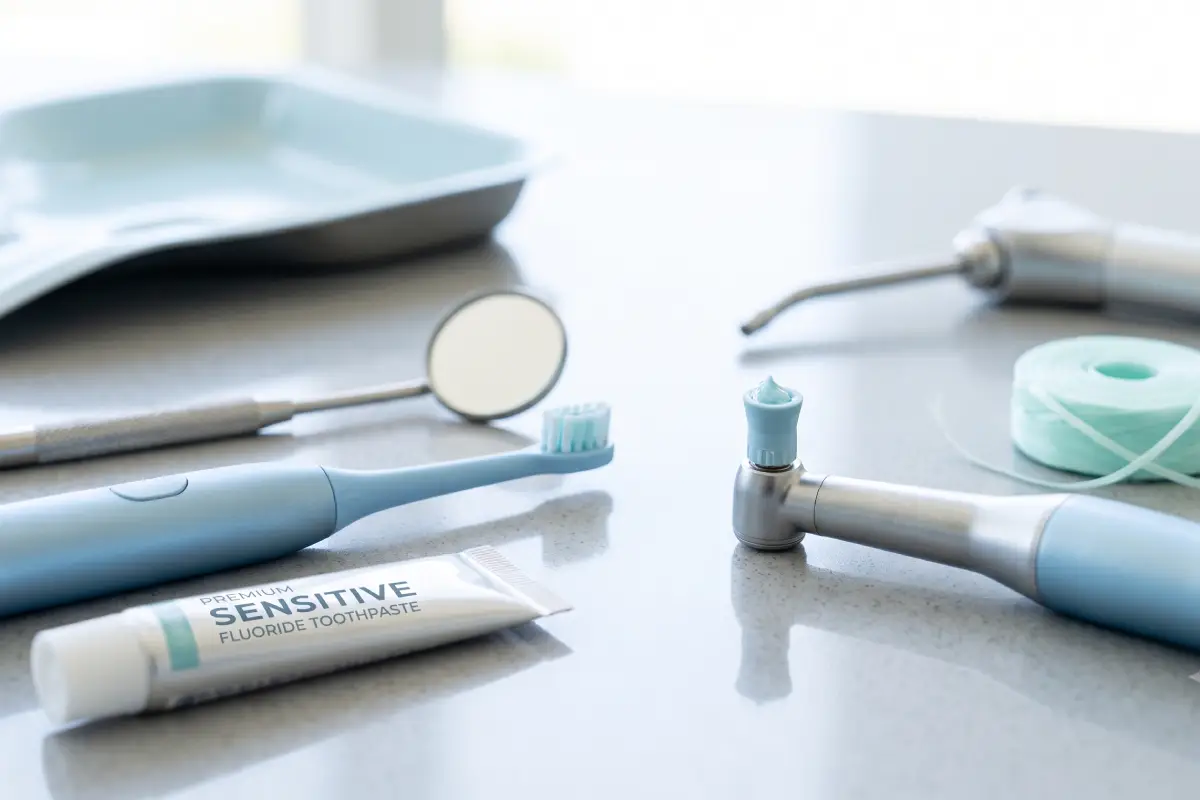
If your teeth feel especially sensitive during brushing, try using a sensitivity toothpaste with potassium nitrate or stannous fluoride. These ingredients help calm nerve signals in your teeth over time.
Floss Daily — Carefully
Flossing after a dental cleaning is important, but go easy. Guide the floss gently between each tooth without snapping it against the gums. If your hygienist found any areas of concern, they may have given you specific instructions — follow those closely.
Use the Right Mouthwash
Rinse with an alcohol-free mouthwash if your gums feel tender. Alcohol-based rinses can dry out and irritate freshly cleaned gum tissue. If your gums are sore, a warm salt water rinse (1/2 teaspoon of salt in 8 oz of warm water) is a great natural option to reduce inflammation.
Avoid using highly pigmented mouthwashes immediately after cleaning — they can stain your teeth before the pellicle has fully reformed.
Managing Sensitivity After a Dental Cleaning
Some sensitivity after a dental cleaning is completely normal, especially if:
- It’s been longer than six months since your last cleaning
- You have early-stage gum disease or receding gums
- Your hygienist needed to clean deeper around the gumline
This happens because cleaning removes built-up tartar that may have been “shielding” some areas. Once that buildup is gone, the tooth surface may feel more exposed temporarily.
Sensitivity usually improves within 24–48 hours. In the meantime:
- Stick to lukewarm foods and drinks
- Use a soft-bristled toothbrush
- Apply a sensitivity toothpaste to affected areas before bed
- Avoid extremely hot, cold, acidic, or sugary foods
When to Call Your Dentist: Mild sensitivity is normal. But if you experience severe pain, prolonged bleeding, swelling, or pain that lasts more than 2–3 days, contact your dentist right away. These could be signs of an underlying issue that needs attention.
Special Aftercare: If You Had a Deep Cleaning (Scaling & Root Planing)
A deep cleaning — also called scaling and root planing — is different from a routine prophylaxis. It’s used to treat gum disease by cleaning below the gumline. Recovery takes a bit longer and requires more careful aftercare:
- Wait at least 1–2 hours before eating (longer if anesthesia was used)
- Stick to very soft foods for 2–3 days after the procedure
- Avoid hard, crunchy, spicy, and acidic foods for 48–72 hours
- Rinse with warm salt water several times per day to soothe gum tissue
- Keep your head elevated while resting to minimize swelling
- Avoid smoking for at least 72 hours — smoking slows healing and significantly increases your risk of infection
- Take any prescribed antibiotics exactly as directed
Deep cleaning is a more involved procedure, but it’s often necessary to stop gum disease from progressing. Your team at Stone Creek Village Dentistry will give you personalized instructions based on exactly what was done during your visit.
Long-Term Care: Keeping Your Smile Healthy Between Cleanings
A professional cleaning gives your smile a fresh start — but what you do every single day is what protects it long-term. Here’s how to make your cleaning results last as long as possible:
Brush and Floss Consistently
Brush twice a day for at least two minutes each time. Floss once a day, every day. These two habits alone prevent the vast majority of dental problems.
Drink More Water
Water helps rinse bacteria and food debris from your mouth. It also neutralizes acids that can erode enamel. If your community water is fluoridated, drinking it also gives your teeth an extra layer of protection.
Limit Staining Beverages
Coffee, tea, and red wine are the biggest culprits for post-cleaning staining. If you can’t give them up, try drinking through a straw to minimize contact with your teeth, and rinse with water immediately after.
Quit Smoking
Tobacco use — cigarettes, cigars, chewing tobacco, or vaping — dramatically increases your risk of gum disease, tooth decay, and oral cancer. It also makes it much harder for your mouth to heal after any dental procedure.
Schedule Your Next Cleaning
The American Dental Association recommends most patients visit the dentist every six months for a routine cleaning and exam. Some patients with gum disease or high cavity risk may need to come in every three to four months.
Did you know? According to the CDC, nearly 46% of U.S. adults have some form of gum disease — and many don’t even know it. Regular dental cleanings are one of the most effective tools we have to catch and prevent it early.
Why Regular Dental Cleanings Matter More Than You Think
Many people only think about dental cleanings for their teeth. But the benefits go much further than a bright smile:
- Prevents gum disease — which is linked to heart disease, diabetes complications, and even cognitive decline
- Catches cavities early — when they’re small, inexpensive, and easy to treat
- Removes tartar that no amount of home brushing can eliminate
- Screens for oral cancer — which has a much better prognosis when caught early
- Supports your overall health — research shows that gum disease increases the risk of heart disease by nearly 30%
Taking care of your mouth is taking care of your whole body.
Schedule Your Next Dental Cleaning at Stone Creek Village Dentistry
If you’re in Del Rey Oaks or the greater Monterey Bay Area and you’re looking for a dental team that truly takes care of you — before, during, and after every visit — Stone Creek Village Dentistry is here for you.
Our friendly, experienced team takes time to explain exactly what we’re doing and why, so you always leave knowing how to protect your smile. We offer routine cleanings, deep cleanings, and full preventive care for patients of all ages.
Ready to book your next cleaning? Call us today or request an appointment online — we’d love to help you keep your smile at its best.
Conclusion
Caring for your mouth after a dental cleaning doesn’t have to be complicated. Wait a bit before eating if fluoride was applied, choose soft and mild foods, brush and floss gently, drink plenty of water, and skip the coffee and staining drinks for a few hours. Those simple steps make a real difference in how long your cleaning results last.
At Stone Creek Village Dentistry, we’re committed to making every visit as comfortable as possible — and making sure you leave with all the information you need. Have a question about your aftercare? Don’t hesitate to give us a call at (831) 920-6900. We’re always happy to help.
This content is for informational purposes only and is not intended as a substitute for professional dental advice, diagnosis, or treatment. Always follow the specific instructions given by your dentist or dental hygienist.