A dental emergency can strike without warning — one moment you’re enjoying a meal, the next you’re in severe pain with no idea what to do next. Knowing exactly what to do in the first few minutes can be the difference between saving your tooth and losing it for good.
This guide will walk you through the most common dental emergencies, what first aid steps to take right now, and when to call your dentist in Del Rey Oaks immediately.
Why Dental Emergencies Happen More Than You Think
Dental problems do not always come with a warning. According to a 2025 report by the National Center for Health Statistics, tooth disorders accounted for an annual average of nearly 1.9 million emergency department visits in the United States — or about 59.4 visits per 10,000 people — between 2020 and 2022. That is a staggering number, and most of those trips to the ER could have been handled faster and more effectively at a dental office.
On average, over $45 billion in U.S. productivity is lost every year due to untreated dental disease, and millions of school hours are missed because of unplanned dental care. The good news? When you know what to do — and who to call — a dental emergency does not have to turn into a dental disaster.
What Is a Dental Emergency?
Not every dental problem is an emergency. Understanding the difference helps you act fast when it really matters.
A dental emergency is any dental problem that requires immediate attention. If you have bleeding that will not stop, pain that does not get better with medication, or broken facial bones, you need dental emergency care right away.
True dental emergencies include:
- A knocked-out (avulsed) tooth
- Severe toothache with swelling
- Dental abscess or infection with fever
- Badly cracked or broken tooth
- Partially dislodged (extruded) tooth
- Uncontrolled bleeding in the mouth
- Swelling of the face, jaw, or neck
- Lost or broken crown or filling causing sharp pain
Situations that can wait for a regular appointment:
- A small chip or crack that causes no pain
- A dull, mild toothache with no swelling
- Broken braces or orthodontic wire
- Minor soft tissue injury like a small cut
If you are not sure whether your situation is an emergency, it is always safer to call your dentist right away. At Stone Creek Village Dentistry in Del Rey Oaks, CA, our team can help you figure out exactly what your next step should be — call us at (831) 920-6900.
Step-by-Step: What to Do for the Most Common Dental Emergencies
1. Knocked-Out Tooth (Avulsed Tooth)
This is one of the most time-sensitive dental emergencies you can face. The chance of saving the tooth decreases dramatically with each passing minute — reimplantation within 30 minutes gives the best odds of success.
What to do right now:
- Pick up the tooth by the crown (the white part you can see). Never touch the root.
- Gently rinse it with clean water. Do not scrub it.
- Try to place it back into the empty socket. Hold it gently in place by biting on a clean piece of gauze.
- If reinsertion is not possible, store the tooth in milk to preserve its vital cells. Never store a knocked-out tooth in water, as this can damage the root cells needed for reimplantation.
- Call Stone Creek Village Dentistry immediately at (831) 920-6900 and head to our Del Rey Oaks office without delay.
Key rule: Time is everything. Act within 30 minutes for the best chance of saving the tooth.
2. Severe Toothache
Sudden, intense tooth pain is your mouth’s way of telling you something is seriously wrong — usually an infection, abscess, or advanced decay.
What to do right now:
- Rinse your mouth thoroughly with warm water.
- Use a moistened piece of gauze or dental floss to gently remove any food lodged between the teeth.
- Take an over-the-counter pain reliever like ibuprofen or acetaminophen as directed on the label.
- Never place aspirin directly on the gum or tooth. It can burn and damage the soft tissue.
- Apply a cold compress to the outside of your cheek for 10 to 20 minutes to help reduce swelling.
- Call us right away. Severe tooth pain rarely gets better on its own and often means an underlying infection that needs treatment.
3. Cracked or Broken Tooth
A cracked tooth can range from a minor cosmetic issue to a serious structural problem exposing the nerve.
What to do right now:
- Rinse your mouth with warm water to clean the area. Use cold compresses on the outside of your face to reduce possible swelling, and use gauze to apply pressure if there is any bleeding.
- Save any broken tooth fragments and bring them to your appointment.
- Avoid chewing on that side of your mouth.
- Call (831) 920-6900 as soon as possible. Treatment options range from bonding and crowns to root canals, depending on the severity.
4. Dental Abscess (Tooth Infection)
A dental abscess is a pocket of infection in or around the tooth. This is one of the most dangerous dental emergencies because the infection can spread to your jaw, neck, or even your bloodstream if left untreated.
Signs of a dental abscess:
- A painful, swollen bump on the gum (looks like a pimple)
- Severe, throbbing pain
- Fever or chills
- Bad taste in your mouth
- Swelling in your face or jaw
What to do right now:
- Rinse your mouth with warm salt water several times a day to help reduce bacteria and ease discomfort. Take over-the-counter pain medication like ibuprofen as needed, but avoid placing aspirin directly on the gum.
- Do not try to pop or drain the abscess yourself.
- Call us immediately or go to an emergency room if you develop a fever, difficulty swallowing, or significant swelling in your neck. If left untreated, an abscess can spread to other parts of your body.
5. Lost Filling or Crown
Losing a filling or crown leaves the inner tooth exposed and vulnerable to bacteria, temperature sensitivity, and further damage.
What to do right now:
- Apply dental cement or sugarless gum to cover the exposed tooth temporarily as a stopgap measure.
- For a crown, coat the inside with dental cement or a dab of toothpaste and try to gently slide it back over the tooth. Never use super glue.
- Bring the crown or filling with you to your appointment.
- Avoid eating on that side and call us to schedule a repair as soon as possible.
6. Soft Tissue Injuries (Cuts to Lips, Gums, Tongue, or Cheek)
Injuries to the soft tissues of your mouth can bleed heavily and look alarming, but most can be managed at home until you are seen.
What to do right now:
- Rinse your mouth with a mild salt-water solution. Use a moistened piece of gauze or a caffeinated tea bag to apply pressure to the bleeding site. Hold in place for 15 to 20 minutes.
- Apply a cold compress to the outside of your cheek or lip to reduce swelling.
- Go to the emergency room or urgent care clinic if bleeding cannot be stopped, or if the wound is deep and shows signs of redness or drainage.
7. Possible Broken Jaw
A broken jaw is a medical emergency, not just a dental one.
What to do right now:
- Apply cold compresses to control swelling and apply pressure with gauze to any wounds to stop bleeding.
- Do not try to realign the jaw yourself.
- Go to the nearest emergency room immediately.
ER vs. Dentist: Where Should You Go?
This is a question we hear often. Here is the honest answer: While the ER can help with the immediate, life-threatening symptoms of a dental emergency — such as giving you pain medication, antibiotics, or draining an abscess — the medical professionals there cannot fix the underlying dental problem. They cannot perform a root canal, fill a cavity, fix a broken tooth, or extract a tooth in most cases.
Go to the ER if you have:
- Swelling in your face, jaw, or neck that is spreading
- Difficulty breathing or swallowing
- A broken jaw
- Uncontrolled bleeding
- High fever alongside tooth pain
Call your dentist first for everything else. Your dentist can treat the root cause — not just the symptoms. At Stone Creek Village Dentistry, we offer same-day emergency appointments so you are not left waiting in pain.
Call us now: (831) 920-6900
Build a Dental First Aid Kit at Home
Being prepared is one of the simplest things you can do to protect your family. Keep these items in a small kit at home and when you travel:
- Dental cement (available at most pharmacies) — for lost fillings or crowns
- Gauze pads — to control bleeding and protect exposed areas
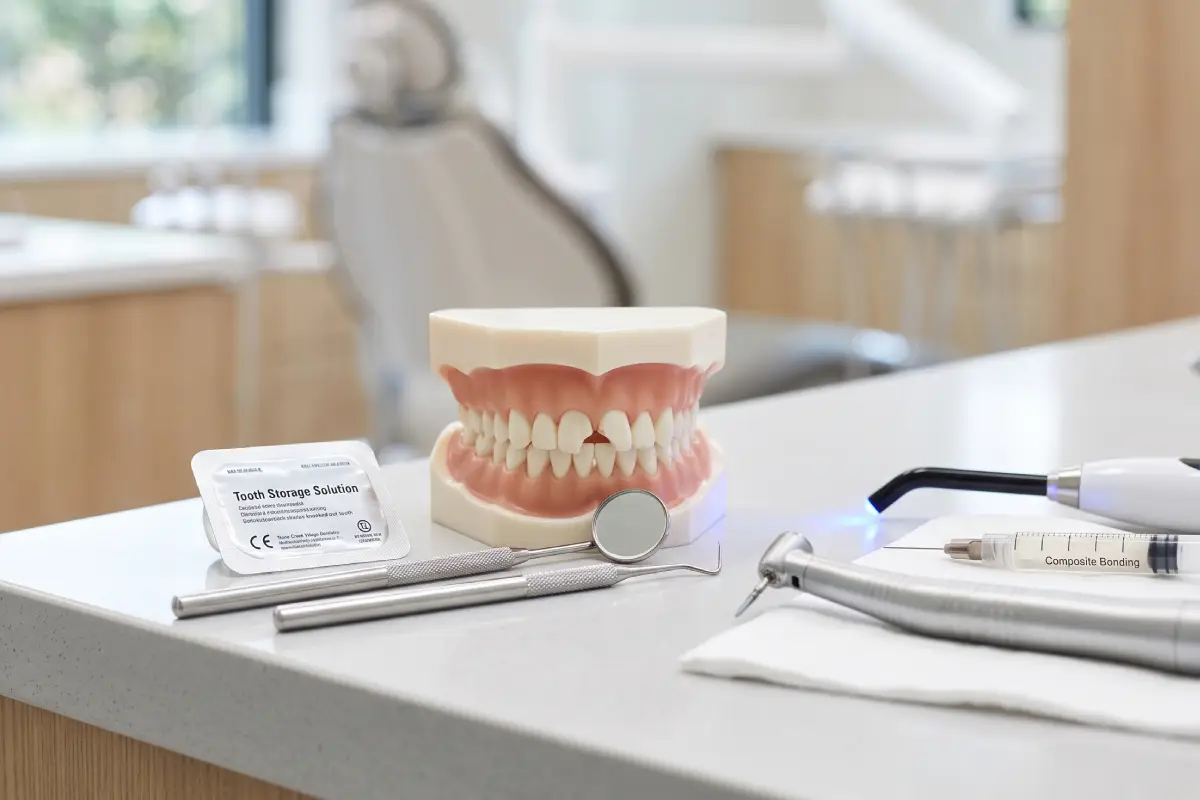
- Small container with a lid — to store a knocked-out tooth in milk
- Ibuprofen or acetaminophen — for temporary pain relief
- Dental floss — to remove food stuck between teeth
- Cold pack — to reduce swelling
- Stone Creek Village Dentistry’s number: (831) 920-6900
How to Prevent Dental Emergencies
Not all emergencies can be prevented, but many can be avoided with a few smart habits:
Wear a mouthguard during contact sports or any activity where you could take a hit to the face. This is one of the most effective ways to protect your teeth from trauma.
Avoid chewing on hard objects like ice, popcorn kernels, hard candies, or pen caps. These are common culprits behind cracked and broken teeth.
Stay on top of routine dental care. Many emergencies — like a sudden abscess or a tooth that breaks without warning — start as small problems that go undetected without regular checkups. Early treatment is always easier, less painful, and less costly.
Address tooth pain early. Pain is your body’s signal that something needs attention. A mild ache today can become a full abscess or emergency next week if ignored.
At Stone Creek Village Dentistry, we provide comprehensive preventive and restorative care designed to catch problems before they become emergencies.
Why Patients in Del Rey Oaks and Monterey Trust Stone Creek Village Dentistry
When a dental emergency hits, you need someone you can trust — fast. Here is why so many families in Del Rey Oaks, Monterey, Seaside, and surrounding communities call us first:
- Same-day emergency appointments — we make room for you when it matters most
- Experienced team led by Dr. James Kim, DDS (Loma Linda University), with over 15 years of serving the Monterey Peninsula community
- Advanced diagnostic technology — including digital X-rays and AI-assisted imaging for faster, more accurate treatment
- Gentle, compassionate care — even when you are anxious and in pain, our team treats you like family
- Centrally located at 463 Canyon Del Rey Blvd, Del Rey Oaks — just minutes from Monterey, Seaside, and Pacific Grove
Whether you cracked a tooth on a stubborn mussel at Old Fisherman’s Wharf or knocked one out during a pickup game at the park, we are here for you.
Do not wait through your pain. Call us now and we will get you seen as soon as possible.
This article is for informational purposes and does not replace professional dental advice. If you are experiencing a dental emergency, please call Stone Creek Village Dentistry at (831) 920-6900 or visit your nearest emergency room for life-threatening situations.