Your gums could be slowly breaking down right now — and you might not feel a thing. Gum disease is one of the most common health problems in America, yet most people don’t even know they have it until real damage has already been done.
If your gums bleed when you brush, you wake up with bad breath, or your teeth feel a little loose, your body is sending you a message. This guide will help you understand what gum disease is, how to spot the warning signs early, and what you can do about it — right here in Del Rey Oaks, CA at Stone Creek Village Dentistry.
What Is Gum Disease?
Gum disease — also called periodontal disease — is an infection of the gum tissue and bone that holds your teeth in place. It starts with bacteria in your mouth forming a sticky film called plaque on your teeth. If you don’t remove plaque through daily brushing and flossing, it hardens into tartar, which only a dental professional can remove.
Over time, this buildup irritates your gums, causes infection, and — if left untreated — can destroy the bone supporting your teeth.
The good news? When caught early, gum disease is very treatable.
How Common Is Gum Disease?
You are not alone if you are dealing with this.
According to the Centers for Disease Control and Prevention (CDC), nearly 47% of American adults aged 30 and older have some form of periodontal disease. That number rises to 70% in adults 65 and older. In fact, about 64.7 million Americans are affected right now.
Here in Monterey County, local health data confirms that a significant number of adults do not visit the dentist regularly — which means many cases of gum disease go undetected until they are harder to treat.
The bottom line: gum disease is extremely common, it is largely silent in the early stages, and it needs professional attention.
The Two Main Stages of Gum Disease
1. Gingivitis (Early Stage)
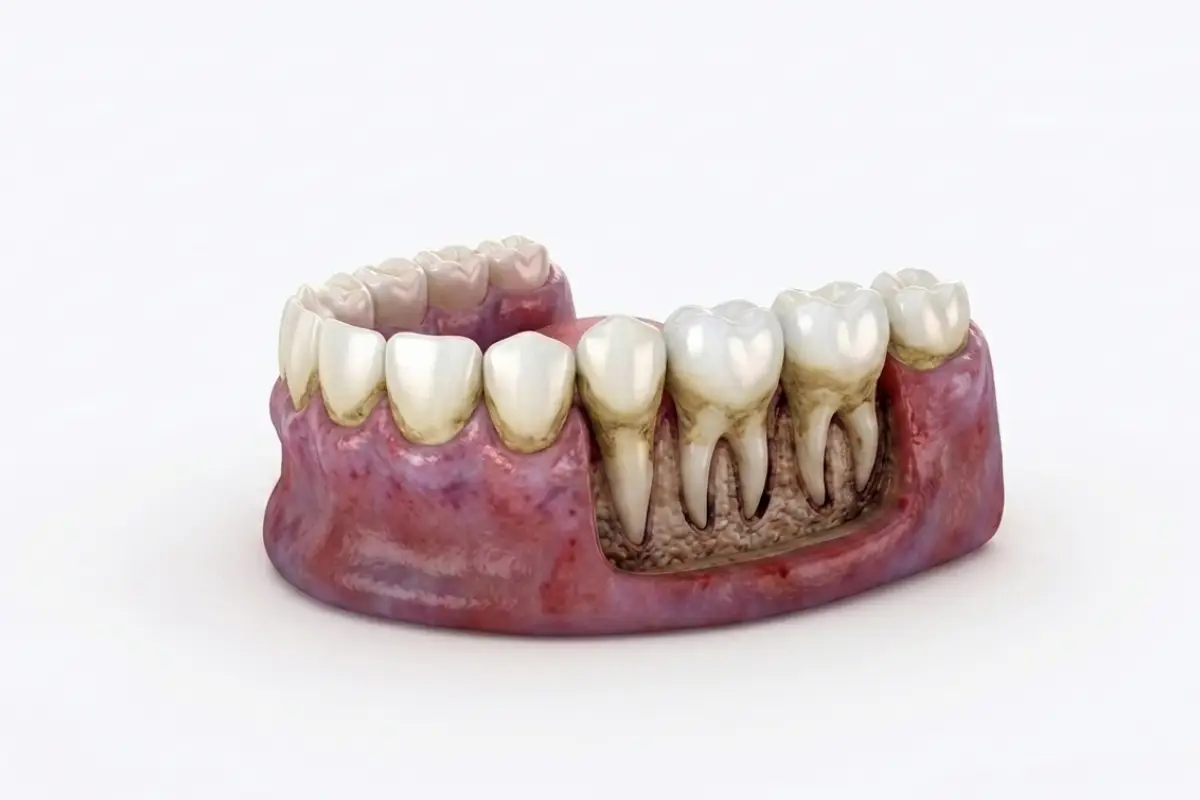
This is the beginning of gum disease. At this stage, your gums become red, swollen, and may bleed when you brush or floss. The good news is that gingivitis is reversible. Your bone and tissue have not been damaged yet. With a professional cleaning and better home care, your gums can return to full health.
2. Periodontitis (Advanced Stage)
If gingivitis is not treated, it can develop into periodontitis. This is when the infection spreads below the gum line. Your gums begin to pull away from your teeth, forming small spaces called “pockets” that fill with more bacteria. Over time, these pockets deepen, and the bone and tissue holding your teeth begin to break down. This can lead to loose teeth and, eventually, tooth loss.
Periodontitis cannot be reversed, but it can absolutely be managed and controlled with the right professional care.
8 Warning Signs You Should Not Ignore
Most people are surprised to learn that gum disease is usually painless — especially in the early stages. That is what makes it so dangerous. Here are the signs to watch for:
1. Bleeding gums when brushing or flossing Healthy gums do not bleed. If yours do regularly, this is one of the earliest and clearest signs of gum disease.
2. Red, puffy, or tender gums Healthy gums are firm and pale pink. Swollen, dark red, or sore gums signal inflammation and infection.
3. Persistent bad breath Bad breath that does not go away — even after brushing — can be caused by bacteria living deep under your gumline.
4. Gums pulling away from your teeth If your teeth look longer than they used to, your gums may be receding. This exposes the root of your tooth and makes it easier for bacteria to cause more damage.
5. Loose or shifting teeth This is a sign that the bone supporting your teeth has been compromised. Do not wait on this — see a dentist as soon as possible.
6. Sensitive teeth When gum tissue pulls back, the root of the tooth becomes exposed. This often causes sharp sensitivity to cold, hot, or sweet foods and drinks.
7. Pus between your teeth and gums This is a direct sign of infection. It requires professional treatment right away.
8. A change in the way your teeth fit together If your bite feels different or your teeth do not line up the way they used to, gum disease may have shifted things below the surface.
Why Gum Disease Is About More Than Your Mouth
This is the part that surprises most people. Gum disease does not stay in your mouth — it affects your whole body.
Research from the University of Utah Health shows that people with periodontal disease have a 30% higher chance of a heart attack and up to a 2.5 times greater risk of stroke compared to people with healthy gums. This is because the bacteria and inflammation from gum disease can enter the bloodstream and travel to other parts of the body.
Recent studies published in 2025 and 2026 have also strengthened the connection between gum disease and:
- Diabetes — Gum disease makes blood sugar harder to control, and high blood sugar makes gum disease worse. It works both ways.
- Heart disease — Inflammation from your gums can affect blood vessels around your heart.
- Pregnancy complications — Hormonal changes during pregnancy increase the risk of gum disease, which has been linked to preterm birth.
- Cognitive health — Emerging research suggests that periodontal bacteria may be connected to cognitive decline, though this research is still ongoing.
Taking care of your gums is not just about your smile. It is about your long-term health.
Who Is at Higher Risk for Gum Disease?
Some people are more likely to develop gum disease than others. Risk factors include:
- Smoking or using tobacco — The single biggest lifestyle risk factor for gum disease
- Diabetes — Especially if blood sugar is not well controlled
- Poor oral hygiene habits — Skipping brushing, flossing, or dental visits
- Certain medications — Over 400 common medications cause dry mouth, which raises the risk of gum disease
- Genetics — Some people are simply more prone to gum infections
- Hormonal changes — Pregnancy, menopause, or puberty can increase gum sensitivity
- Stress — Chronic stress weakens the immune system’s ability to fight infection
- Age — Risk increases significantly after age 30 and sharply again after 65
If any of these apply to you, it is especially important to see a dentist for regular checkups.
How Is Gum Disease Diagnosed?
During your visit at Stone Creek Village Dentistry, Dr. James Kim, Dr. Xenia Rodriguez, and our team will:
- Examine your gums for signs of redness, swelling, or recession
- Measure the pockets around your teeth using a small instrument called a periodontal probe — healthy pockets are 1–3 mm deep; deeper pockets signal disease
- Take digital X-rays to check for bone loss around your teeth
- Review your full health history, including medications and any systemic health conditions
This exam tells us exactly what is happening below the surface, so we can create the right plan for you.
Gum Disease Treatment Options at Stone Creek Village Dentistry
The right treatment depends on how far the disease has progressed. Here is what we offer:
Professional Dental Cleaning (for early gingivitis)
If we catch gum disease early, a thorough professional cleaning — combined with better at-home habits — can reverse gingivitis completely. This is why regular checkups matter so much.
Scaling and Root Planing (Deep Cleaning)
For more advanced gum disease, we perform a deeper cleaning called scaling and root planing. This removes plaque and tartar from below the gumline and smooths the root surface to make it harder for bacteria to reattach. It is the most common and effective non-surgical treatment for periodontitis.
Antibiotic Therapy
In some cases, we place antibiotic medication directly into infected gum pockets after deep cleaning. This helps eliminate bacteria that brushing and cleaning alone cannot reach.
Ongoing Periodontal Maintenance
After treatment, we create a personalized maintenance schedule — typically every 3 to 4 months — to monitor your gum health and prevent the disease from coming back. This is not the same as a routine cleaning. It is a targeted, therapeutic visit designed to keep your gums stable.
Referral to a Specialist When Needed
If your case requires surgical intervention, we will connect you with a trusted specialist in the Monterey area and coordinate your care every step of the way.
What You Can Do at Home
Professional treatment works best when paired with excellent daily habits. Here is what actually makes a difference:
- Brush twice a day for at least two full minutes using a soft-bristled toothbrush
- Floss every day — this removes plaque from between teeth where your brush cannot reach
- Use an antimicrobial mouthwash to reduce bacteria in hard-to-reach areas
- Quit smoking — this is the single most impactful change you can make for your gum health
- Eat a balanced diet and limit sugary snacks and drinks
- Stay hydrated — dry mouth allows bacteria to thrive
- See your dentist regularly — at least twice a year, or more often if you have a history of gum disease
Can Gum Disease Come Back After Treatment?
Yes, it can — which is why maintenance is so important. Gum disease is a chronic condition that requires ongoing management, not a one-time fix. Patients who stay consistent with professional cleanings and good home care experience significantly better long-term outcomes.
Think of it like managing blood pressure or diabetes. Treatment controls the condition. Maintenance keeps it controlled.
Why Choose Stone Creek Village Dentistry for Gum Disease Care?
At Stone Creek Village Dentistry, we believe that caring for your gums is caring for your whole health. Here is what sets us apart:
- Dr. James Kim and Dr. Xenia Rodriguez bring skill, experience, and a genuinely warm approach to every patient visit
- Advanced digital technology, including digital X-rays and same-day crowns with CEREC, so we can see what is happening quickly and accurately
- Comprehensive care under one roof — no need to run to multiple offices
- Serving families of all ages in Del Rey Oaks, Monterey, Seaside, Pacific Grove, Carmel, and the surrounding Monterey Peninsula
- Insurance-friendly — we work with most major insurance plans and offer flexible payment options
- A relaxed, welcoming environment where patients feel comfortable and heard
We have seen patients walk in nervous and walk out with a clear plan — and healthier gums — time and time again.
Don’t Wait — Healthy Gums Start With One Appointment
Gum disease moves quietly. It builds slowly. And by the time most people notice something is wrong, it has already been going on for a while. The best thing you can do is not wait.
A simple exam at Stone Creek Village Dentistry can tell you exactly where your gum health stands — and give you a clear path forward, no matter what we find.
We are here for patients throughout Del Rey Oaks, Monterey, Seaside, Pacific Grove, Carmel, and all across the Monterey Peninsula.
This content is written for informational and educational purposes and is intended as a patient resource. It does not replace professional dental advice. Please schedule an appointment with Stone Creek Village Dentistry for a personalized evaluation of your gum health.