A cracked or badly damaged tooth does not mean you have to lose it — dental crowns save millions of teeth every year and most patients barely feel a thing. If your dentist has mentioned a crown, or you are simply trying to understand your options before your next visit, this guide answers every question you have in plain English.
Below you will learn exactly what dental crowns are, why dentists recommend them, the different types available, what the procedure feels like, how much it costs, and how to make your crown last as long as possible. At the end, we answer the seven questions patients ask most — straight from real patient discussions online.
What Is a Dental Crown?
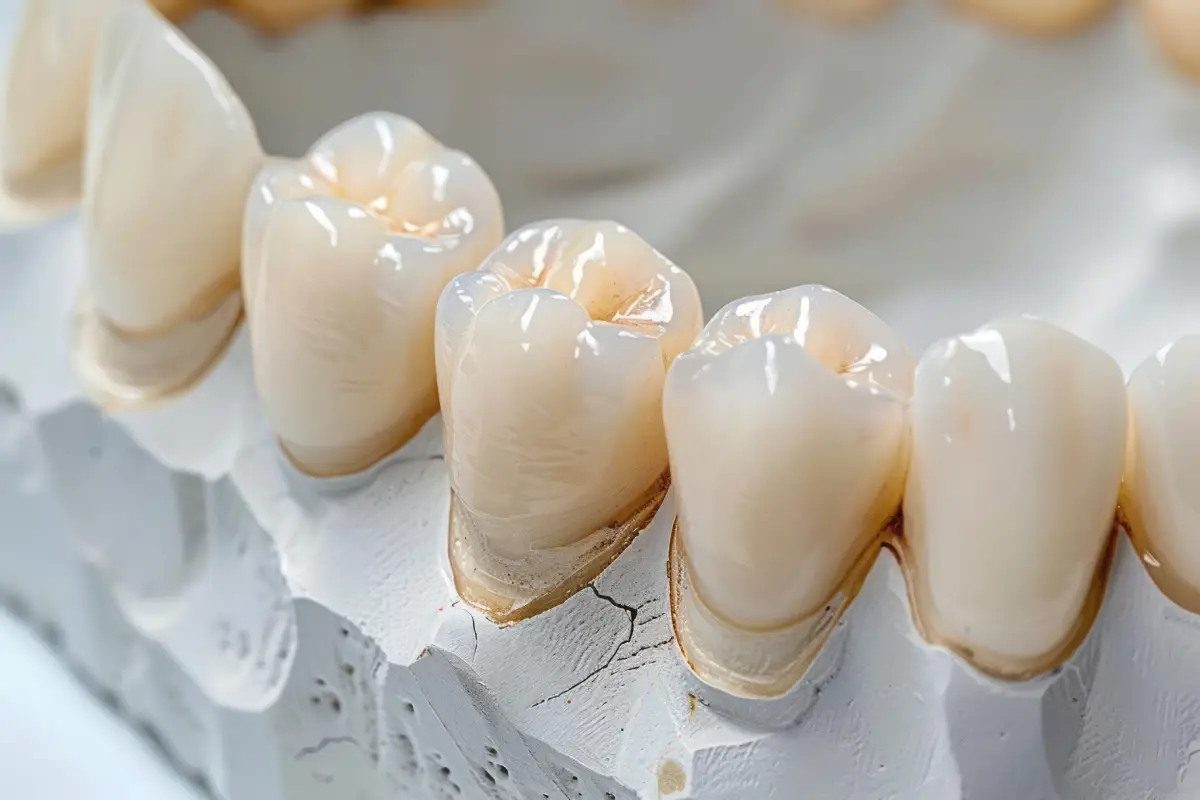
A dental crown is a custom-made cap that fits completely over a damaged or weakened tooth, covering it from the gum line up. Once it is bonded in place, it looks, feels, and works just like your natural tooth — you can chew, speak, and smile with confidence.
Think of it this way: if a tooth is cracked or worn down so much that a filling can no longer hold it together, a crown acts as a sturdy shell that holds everything in place and protects what is underneath.
Dental crowns are one of the most common restorations in dentistry in the United States, and the technology behind them has improved dramatically. Modern crowns made from zirconia and lithium disilicate (E-Max) are so lifelike that most people cannot tell them apart from natural teeth.
What Are Dental Crowns Used For?
Dental crowns have both restorative and cosmetic uses. Here is a clear breakdown:
Restorative Uses
1. Protecting a Cracked or Broken Tooth When a tooth is cracked, every time you bite down the crack flexes and the pain gets worse. A crown holds the two sides of the crack together so the tooth does not split further. Ignoring a crack often leads to infection or total tooth loss, so early treatment matters.
2. Saving a Tooth After a Root Canal A tooth that has had a root canal becomes more brittle over time because the inner pulp tissue — which kept the tooth hydrated — has been removed. Without a crown, back teeth in particular can fracture under normal chewing pressure. A crown placed after a root canal protects the treated tooth and extends its life by many years.
3. Restoring Severe Tooth Decay When a cavity is too large for a filling to repair reliably, a crown rebuilds the entire visible portion of the tooth. This is especially common on molars, which handle heavy chewing forces.
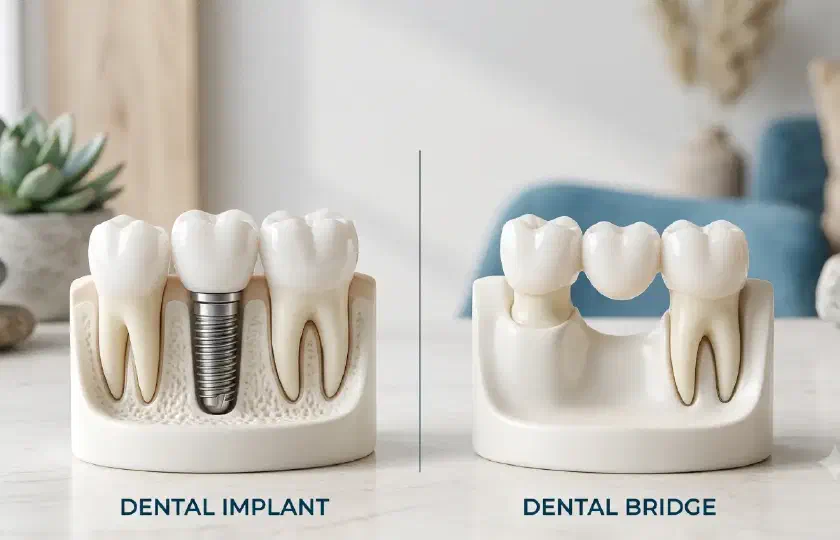
4. Supporting a Dental Bridge If you are missing one or more teeth, the crowns on either side of the gap anchor the bridge in place. This is a common and effective way to replace missing teeth without implants.
5. Capping a Dental Implant A dental implant replaces the root of a missing tooth. The crown — the visible part above the gum — is what you actually see and chew with. Implant crowns are highly durable and look completely natural.
6. Strengthening a Tooth With a Large or Failing Filling Over time, large fillings can weaken the surrounding tooth structure. When more of the tooth is filling than natural tooth, a crown provides the strength and protection the filling no longer can.
Cosmetic Uses
7. Improving the Appearance of Severely Stained Teeth Some discoloration from trauma, medication, or old metal restorations does not respond to whitening. A porcelain or zirconia crown can cover the tooth and give it a bright, natural appearance permanently.
8. Correcting a Misshapen or Undersized Tooth If a tooth is oddly shaped, too small, or has not developed normally, a crown can reshape it to match the rest of your smile.
9. Smile Makeovers In combination with other cosmetic treatments, crowns play a key role in full-smile transformations, especially for front teeth that need both strength and excellent aesthetics.
Types of Dental Crowns: Which One Is Right for You?
Not all crowns are made the same. The best material depends on where the tooth is, how strong it needs to be, and how it looks in your smile. Here is a quick guide:
Porcelain / All-Ceramic Crowns
- Best for: Front teeth where appearance is the top priority
- Lifespan: 10–15 years with good care
- Why choose it: Completely metal-free, matches natural tooth color perfectly, and is biocompatible (friendly to gum tissue)
- Cost (2026): $1,000–$2,500 per tooth
Zirconia Crowns
- Best for: Front and back teeth — the go-to material in 2026
- Lifespan: 15–25 years; among the longest-lasting crown options
- Why choose it: Combines the strength of metal with the look of natural teeth. Very resistant to chipping and fracture. Increasingly the first recommendation from dentists for both molars and visible teeth
- Cost (2026): $1,000–$2,500 per tooth
Porcelain-Fused-to-Metal (PFM) Crowns
- Best for: Back teeth where strength and cost are priorities
- Lifespan: 10–20 years
- Why choose it: Affordable option that still looks natural. Over time, a thin dark line may appear at the gum line as gums recede
- Cost (2026): $800–$2,000 per tooth
E-Max (Lithium Disilicate) Crowns
- Best for: Front teeth requiring high-end aesthetics and strength
- Lifespan: 10–15 years or more
- Why choose it: Prized for exceptional translucency — it mimics the natural way light passes through real tooth enamel, making it nearly impossible to detect
- Cost (2026): $1,000–$2,500 per tooth
Gold / Metal Alloy Crowns
- Best for: Back molars in patients who grind their teeth heavily
- Lifespan: 20–30 years; the longest-lasting crown material available
- Why choose it: Extremely durable, gentle on opposing teeth, and least likely to chip. Rarely used for visible teeth because of color
- Cost (2026): $900–$2,500+ per tooth
Quick Tip: In 2026, zirconia has become the most commonly recommended crown material across US dental practices because it offers the best balance of strength, aesthetics, and long-term value.
The Dental Crown Procedure: Step by Step
Getting a crown typically takes two appointments, although some practices — including modern offices with digital technology — can complete the process in a single visit.
Visit 1 — Preparation (60–90 minutes)
- Examination and X-rays: Your dentist checks the tooth and surrounding bone. If significant decay or infection is found, that is treated first.
- Local anesthesia: The area around your tooth is numbed completely. You should not feel pain during this step.
- Tooth reshaping: A small layer of enamel is removed from the top and sides to make room for the crown. How much is removed depends on the crown material.
- Digital scan or impression: Your dentist takes a precise image or mold of the prepared tooth and surrounding teeth to create your custom crown.
- Temporary crown: A short-term protective cover is placed while your permanent crown is made in a dental laboratory (usually 1–2 weeks).
Visit 2 — Placement (30–60 minutes)
- The temporary crown is removed.
- The permanent crown is checked for fit, color, and bite.
- Any small adjustments are made.
- The crown is permanently bonded to your tooth with dental cement.
- Your dentist checks your bite one final time to make sure everything feels comfortable.
Same-Day Crowns (CEREC Technology)
Some practices use CAD/CAM (computer-aided design and manufacturing) technology — often called CEREC — to design, mill, and place your crown in a single visit. A digital scan of your tooth is taken, and a milling machine carves your crown from a block of zirconia or ceramic right in the office. This means no temporary crown, no second appointment, and no waiting.
Does Getting a Dental Crown Hurt?
This is the question most patients ask first, and the honest answer is: the procedure itself should not hurt at all.
Your dentist will numb the area with local anesthetic before any work begins. Most patients report feeling pressure or vibration but no pain during the preparation. Sedation options are available for patients who feel anxious.
After the appointment, once the numbing wears off, it is very common to experience:
- Mild tenderness around the tooth and gum for a few days
- Brief sensitivity to hot and cold foods for 1–2 weeks
- Some soreness when biting for the first few days
This is completely normal and usually improves quickly. Over-the-counter pain relievers like ibuprofen help manage any discomfort. Most patients report that any post-procedure sensitivity is far less uncomfortable than the original tooth pain that led them to need a crown in the first place.
When to call your dentist: If sensitivity or pain continues beyond 2 weeks, your bite feels wrong, or you notice sharp pain when biting down, contact your dental office. These are usually minor issues — like a bite adjustment — that are easy to fix.
How Long Do Dental Crowns Last?
With proper care, most dental crowns last 10 to 15 years, and many last significantly longer. Research published in the Journal of Prosthetic Dentistry found that about 95% of crowns remain fully functional at the five-year mark. A landmark long-term study found metal-ceramic crowns had a mean survival approaching 47 years when patients maintained excellent oral hygiene and had regular checkups.
Here is a practical lifespan guide by material:
| Crown Material | Average Lifespan |
|---|---|
| All-Porcelain / Ceramic | 10–15 years |
| E-Max (Lithium Disilicate) | 10–15+ years |
| Zirconia | 15–25 years |
| Porcelain-Fused-to-Metal (PFM) | 10–20 years |
| Gold / Metal Alloy | 20–30 years |
What Makes Crowns Fail Earlier?
- Teeth grinding (bruxism) — wearing a night guard prevents this
- Poor oral hygiene — decay can develop at the edge where the crown meets the tooth
- Chewing hard foods like ice, hard candy, or opening packages with your teeth
- Skipping regular dental checkups
How to Make Your Crown Last Longer
- Brush twice a day with a soft-bristled toothbrush, paying attention to the gum line around the crown
- Floss daily — plaque buildup at the crown margin is the leading cause of early failure
- Avoid chewing ice or hard, crunchy foods with your crowned tooth
- Wear a night guard if you grind your teeth
- Keep your six-month cleanings and exams — your dentist monitors the crown’s fit and the gum health around it
How Much Do Dental Crowns Cost in 2026?
Based on the latest data from the ADA and FAIR Health, a single dental crown in the US costs between $800 and $2,500 per tooth in 2026, with the national average falling around $1,000–$1,500.
The main factors that affect price:
- Material: Zirconia, E-Max, and gold sit at the higher end. PFM crowns are typically the most affordable tooth-colored option
- Location of the tooth: Front teeth often require more precise color-matching, which can add to cost
- Additional procedures: A root canal, core buildup, or X-rays add to the total
- Your location: Dental care in the Monterey Bay area and California generally reflects regional cost differences
What About Insurance?
Most dental insurance plans classify crowns as a major restorative procedure and cover approximately 50% of the cost after your annual deductible is met. On a $1,400 crown, this typically means an out-of-pocket cost of roughly $500–$900. Always request a pre-treatment estimate in writing from your insurance provider before scheduling.
Pro Tip: If you need two crowns and have an annual insurance maximum, staging one in December and one in January allows you to tap two benefit cycles instead of one.
Do You Really Need a Dental Crown? Signs You Should Not Ignore
Sometimes patients wait to see a dentist because they are hoping the problem will go away on its own. With dental issues, waiting usually makes things worse and more expensive to fix. See your dentist soon if you notice:
- A cracked tooth that causes sharp pain when biting
- Severe sensitivity to hot and cold that does not go away
- A large filling that feels loose or cracked
- Visible tooth damage — chips, fractures, or large areas of decay
- Pain after a root canal that has not settled
- A tooth that looks much darker than its neighbors
Catching these issues early often means a crown is all you need. Waiting too long can mean extraction and a more involved (and expensive) replacement like an implant.
Dental Crowns vs. Other Restorations: How Do You Know Which One You Need?
Not every damaged tooth needs a full crown. Here is a simple comparison:
| Situation | Best Option |
|---|---|
| Small to medium cavity | Composite filling |
| Cavity covering less than half the tooth | Inlay or onlay |
| Severely decayed, cracked, or weakened tooth | Dental crown |
| Missing tooth with healthy surrounding teeth | Bridge (with crowns on adjacent teeth) |
| Missing tooth with strong jawbone | Dental implant with crown |
Your dentist will always recommend the most conservative option that will still protect your tooth effectively. A crown removes more tooth structure than a filling or inlay, so it is recommended only when the damage truly warrants it.
Why Choose Stone Creek Village Dentistry for Your Dental Crown?
At Stone Creek Village Dentistry in Del Rey Oaks, CA, we understand that finding out you need a crown can feel overwhelming. Our goal is to make the experience as comfortable and straightforward as possible — from the first exam to the final placement.
Our team uses advanced digital technology for precise impressions and crown design, which means better-fitting crowns, fewer adjustments, and a more comfortable experience overall. We take the time to explain your options, including material choices and cost, so you can make an informed decision that fits your smile goals and your budget.
We proudly serve patients from Del Rey Oaks, Monterey, Seaside, Carmel, and the surrounding Monterey Bay communities.
Ready to protect your smile?
📍 Stone Creek Village Dentistry 463 Canyon Del Rey Blvd, Del Rey Oaks, CA 93940 📞 (831) 920-6900 🌐 stonecreekvillagedentistry.com
Schedule Your Crown Consultation →
Conclusion Dental crowns are a proven solution for restoring damaged teeth, protecting them after root canals, and improving your smile. With options in zirconia, porcelain, E-Max, and other materials, treatment is comfortable and delivers long-lasting results—often 10 to 15 years or more. Maintaining good oral hygiene and regular dental checkups helps maximize their lifespan. Consult your dentist to determine if a dental crown is the right choice for your needs.
If you have been told you need a crown, or if you have a cracked or painful tooth you have been putting off, the team at Stone Creek Village Dentistry is ready to help. We make the process easy, explain every step, and work with your insurance to keep things as affordable as possible.
📞 Call us today at (831) 920-6900 or request an appointment online.
This content is provided for educational purposes and is not a substitute for professional dental advice. Please schedule a consultation with a licensed dentist to determine the best treatment for your individual needs.
Stone Creek Village Dentistry | 463 Canyon Del Rey Blvd, Del Rey Oaks, CA 93940 | (831) 920-6900 | stonecreekvillagedentistry.com