An acrylic partial denture is a removable appliance that replaces one or more missing teeth with a pink acrylic base, artificial teeth, and clasps that grip your natural teeth. It is the most affordable tooth replacement option, typically costing $300–$600 for a small “flipper” or $500–$1,500 for a larger acrylic partial
—and it can often be made faster than any other prosthesis, sometimes within days.
At Stone Creek Village Dentistry in Del Rey Oaks, CA, we fit acrylic partials both as budget-friendly tooth replacement and as an interim appliance while patients prepare for implants or a bridge. This guide covers 2026 costs, honest pros and cons, how long they last, and how to care for one.
Key Takeaways
- Acrylic partial dentures are also called flippers — the least expensive, fastest-to-make removable tooth replacement.
- Cost: $300–$600 for a small flipper, $500–$1,500 for a larger acrylic partial (2026 figures); metal partials run $1,000–$2,500.
- Lifespan: about 3–5 years. A 2024 study of 1,246 patients found a median survival of ~45 months for acrylic vs. ~73 months for metal-frame partials.
- Best uses: temporary replacement after an extraction, a stopgap before implants or a bridge, or a long-term budget option for patients who cannot have implants.
- Daily removal and cleaning are non-negotiable — the clasped teeth and gums are at higher risk of decay and disease if the partial stays in around the clock.
- Adjusting takes 2–4 weeks; sore spots and looseness are fixed with simple follow-up adjustments.
What Exactly Is an Acrylic Partial Denture?
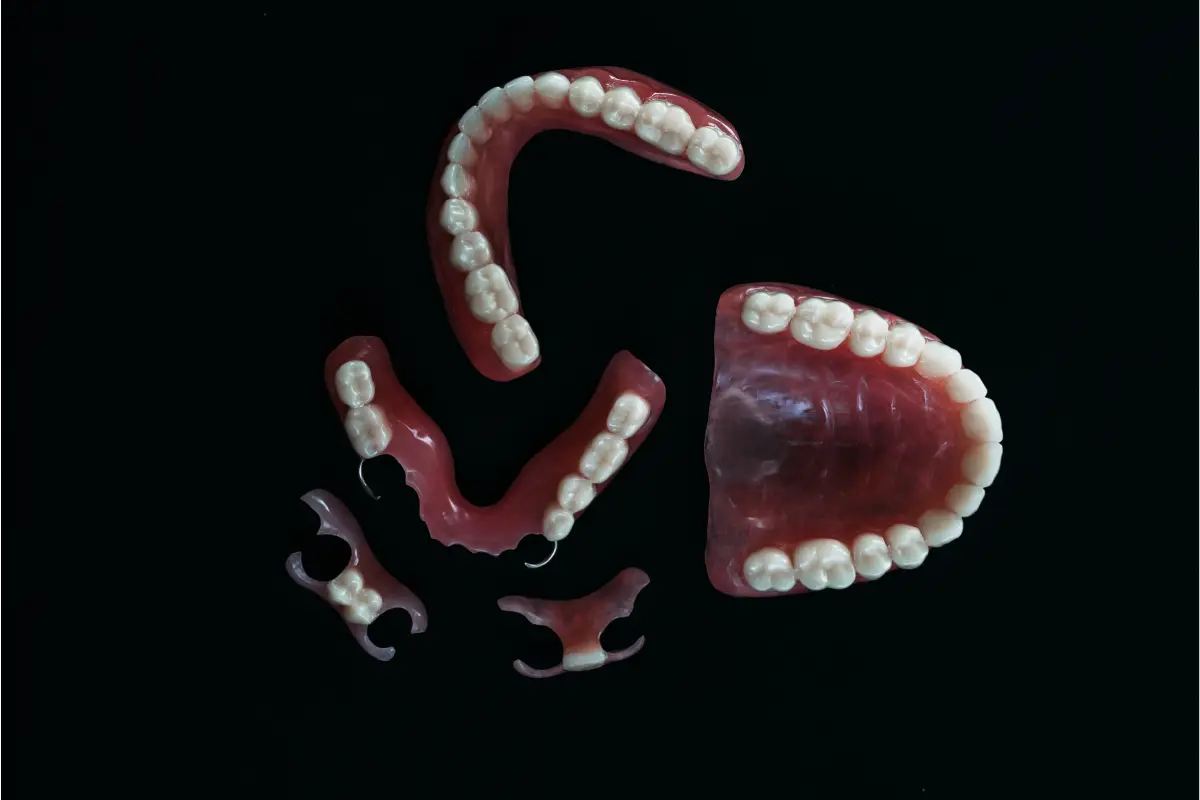
An acrylic partial denture — often called a flipper tooth or interim partial denture — is a removable dental prosthesis built entirely from acrylic resin:
- A pink acrylic base shaped to sit on your gum ridge and match your gum color
- One or more artificial teeth set into the base, matched to your natural teeth
- Wire or acrylic clasps that hook around nearby teeth for retention
Unlike a cast metal partial, which has a rigid metal framework resting on the teeth, an acrylic partial gets most of its support from the gum ridge itself. That simplicity is what makes it fast to fabricate and inexpensive — and also what limits its durability.
A quick note on terminology: dentists use “acrylic partial,” “flipper,” and “interim RPD” (removable partial denture) largely interchangeably. If you have read about “flipper teeth” online, you have been reading about acrylic partial dentures.
What Are the Types of Acrylic Partials?
- Standard flipper (interim partial): one to a few replacement teeth on an acrylic base with wire clasps; the most common type.
- Spoon denture: a clasp-free acrylic partial shaped like a spoon, used briefly for front-tooth gaps.
- Flexible partial (thermoplastic): a thinner, softer nylon base that flexes around your gums — more comfortable and discreet, but it cannot be repaired if it cracks. It is technically a separate material from acrylic, but it is grouped with flippers because it is likewise a simple, gum-supported removable partial.
- Two-piece sectional partial: made in sections to fit around existing dental work or unusual arch shapes.
How Much Do Acrylic Partial Dentures Cost?
As of 2026, typical price ranges are:
| Tooth replacement option | Typical cost | Notes |
|---|---|---|
| Acrylic flipper (1–2 teeth) | $300–$600 | Fastest to make; interim use |
| Full acrylic partial (several teeth) | $500–$1,500 | Larger acrylic partials |
| Cast metal partial | $1,000–$2,500 | Thinner, stronger, lasts longer |
| Flexible partial (Valplast-type) | $900–$2,500 | Most comfortable; cannot be repaired |
| Dental bridge (fixed) | $1,500–$6,500 | Depends on type and materials |
| Dental implants | $3,000–$6,000 per tooth | Permanent; surgical |
What moves the price: the number of teeth replaced, whether extractions are needed first, the lab materials chosen, and your insurance. Many plans with major-restorative benefits cover part of a partial denture; more than 1 in 4 US adults has no dental insurance at all, which is a big part of why acrylic partials remain the most common first choice. Ask us about financing options for the rest.
Pros and Cons of Acrylic Partial Dentures
Pros:
- Lowest cost of any tooth-replacement option
- Quick turnaround — often ready within days of your impression
- Non-invasive: no surgery, no drilling down neighboring teeth
- Easy to repair and adjust chairside; teeth can even be added later
- Natural-looking pink base blends with your gums
- Stabilizes your remaining teeth and keeps spaces from shifting
Cons:
- Least durable option — acrylic cracks and wears faster than metal frameworks
- Bulkier than a metal partial, which can affect speech and comfort at first
- Can trigger the gag reflex when the base extends far back
- Clasped teeth face a higher decay and gum-disease risk without meticulous cleaning
- Covering the gums can contribute to gum recession over time
- May loosen as your gums and bone change shape; needs periodic relines
- A small risk of allergic reaction to the acrylic material — tell us about any dental-material allergies
None of these cons is a dealbreaker for the right patient — but they are the reason we frame acrylic partials as an interim or economy solution rather than the longest-lasting one.
How Long Do Acrylic Partial Dentures Last?
Honest answer: 3–5 years in typical use, with a median of about 45 months. A 2024 ten-year retrospective study of 1,246 denture-wearing patients in the Journal of Dentistry found acrylic (plastic) partials lasted a median of roughly 45 months, while cobalt-chromium metal-frame partials lasted about 73 months — nearly twice as long.
Two things reliably extend an acrylic partial’s life:
- Regular maintenance visits — adjustments and relines as your mouth changes
- Nightly removal and daily cleaning — acrylic collects bacterial biofilm faster than other denture materials
If your partial cracks, loosens, or stops seating fully, bring it in rather than waiting. Chairside repairs are inexpensive; a fractured base usually is not.
The Process: What to Expect
- Consultation — exam, X-rays, and a conversation about your goals and timeline.
- Impressions or digital scan — a mold of your arch is sent to the dental lab.
- Fabrication — the lab builds the base and sets the artificial teeth; small flippers can be ready in days.
- Fitting visit — we check the bite, clasp pressure, and comfort, and adjust chairside.
- Adjustment period — expect 2–4 weeks of extra saliva, mild soreness, and slightly altered speech while your mouth adapts.
- Follow-ups — quick adjustment visits fix sore spots; relines keep the fit snug as your tissues settle.
Getting a partial right after an extraction is a common use: the appliance can be made before the extraction and placed the same day, so you never leave the office with a visible gap.
Eating and Speaking with an Acrylic Partial
First weeks: soft foods — soups, pasta, eggs, fish, mashed vegetables. Cut everything small and chew on both sides so the partial does not tip.
Longer term: most patients eat nearly everything again, though very hard or sticky foods (nuts, hard candy, caramel, ice) put the acrylic and clasps at risk. Speech changes — usually a slight lisp — resolve within a week or two as your tongue adapts.
How to Care for an Acrylic Partial Denture
- After every meal: remove and rinse under lukewarm water.
- Daily: brush with a soft denture brush and mild soap or non-abrasive denture cleanser — regular toothpaste scratches the acrylic.
- Nightly: remove it and store in plain water or denture solution. Never let it dry out, and never use hot water — it warps the base.
- Handle over a towel or a full sink so a drop does not crack it.
- Brush and floss your natural teeth carefully, especially where the clasps grip.
- Bring the partial to every checkup so we can inspect it and clean it professionally.
Who Is a Candidate for an Acrylic Partial?
Good candidates:
- Patients missing one or more teeth with some healthy teeth remaining for clasps to grip
- Patients waiting for implants or a permanent bridge who want a natural-looking stopgap
- Patients who cannot have implants due to health, bone, or budget reasons
- Anyone needing a fast, affordable replacement after an extraction
Better served by other options:
- Severe gum disease — treat that first, or the partial will not hold
- Heavy bite forces or grinding — a cast metal partial holds up far better
- No usable teeth in the arch — a full denture is the right appliance
- Long-term, permanent replacement as the priority — implants or a fixed bridge serve better
One caution: avoid mail-order or do-it-yourself flipper kits. An ill-fitting appliance can damage the teeth it grips and the gums it rests on — a partial should be made from professional impressions or a scan and fitted by a dentist.
Acrylic vs. Metal vs. Flexible Partials at a Glance
| Acrylic (flipper) | Cast metal | Flexible | |
|---|---|---|---|
| Cost | $300–$1,500 | $1,000–$2,500 | $900–$2,500 |
| Median lifespan | ~45 months | ~73 months | ~5 years |
| Thickness | Bulkier | Thinnest | Thin, flexes |
| Comfort | Good after adjustment | Good | Best |
| Repairable | Yes, chairside | Yes, but harder | No — replace if broken |
| Best for | Interim use, tight budgets | Long-term daily wear | Comfort and metal allergies |
The Bottom Line
Acrylic partial dentures are the fastest, most affordable way to replace missing teeth — and when they are fitted well, cleaned daily, and maintained on schedule, they serve patients well for years. They trade some durability and slimness for a price that makes tooth replacement possible on almost any budget.
If you have a gap you would like filled — or an extraction coming up and want to leave the office with a complete smile — call Stone Creek Village Dentistry at 831-920-6900 or schedule a visit. We help patients from Del Rey Oaks, Monterey, Seaside, Carmel, Pacific Grove, and Marina choose the right replacement and keep it fitting comfortably for years.