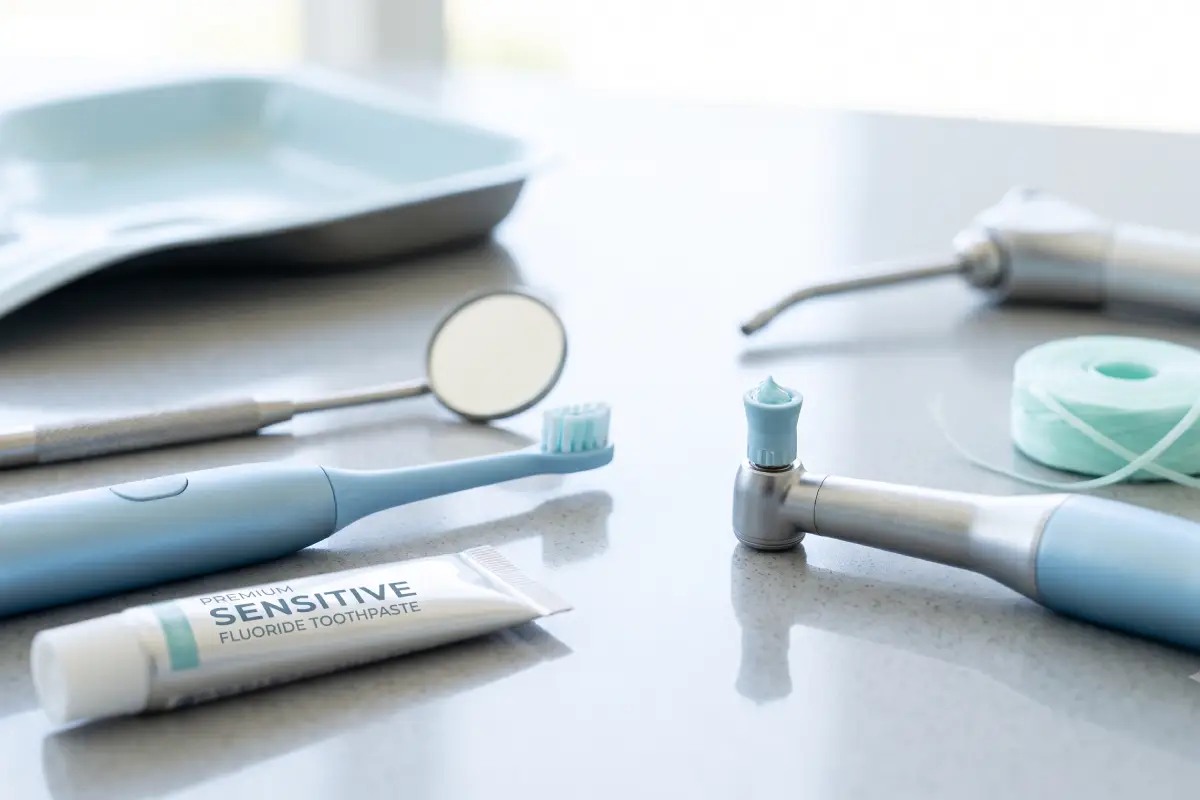
A deep cleaning of the teeth — clinically called scaling and root planing — removes plaque and hardened tartar from below the gumline and smooths the tooth roots so your gums can reattach and heal.
It is the standard first-line treatment for gum disease: if your hygienist has measured periodontal pockets of 4 mm or deeper, a routine cleaning is no longer enough to stop the infection.
At Stone Creek Village Dentistry in Del Rey Oaks, CA, we perform deep cleanings in comfortable, numbed visits and follow them with a personalized maintenance plan. This guide explains who needs one, what it costs, how the procedure works, and how to recover quickly.
Key Takeaways
- Deep cleaning : scaling and root planing. Scaling removes tartar above and below the gumline; root planing smooths the roots so gums reattach.
- You need one if you have periodontal pockets of 4 mm or deeper, bleeding gums, or X-ray evidence of bone loss — signs of gum disease, not just plaque buildup.
- Typical cost: $150-$350 per quadrant, or about $600-$1,400 for a full mouth; most dental insurance covers a substantial portion.
- Usually two 60-90 minute visits, numbed with local anesthetic, one half of the mouth per visit.
- Mild soreness and sensitivity for a few days is normal; recovery tips below make it easier.
- Deep cleaning halts gum disease but doesn’t immunize you — 3-4 month maintenance cleanings and daily brushing and flossing keep the results.
📄 Free download: our print-ready Deep Cleaning Patient Guide & Recovery Checklist (PDF) — pocket-depth scale, cost table, procedure steps, and a recovery checklist you can bring to your appointment.
Regular Cleaning vs. Deep Cleaning: The Difference
Patients often ask why their cleaning “suddenly” costs more or takes two visits. The difference is whether gum disease is present:
| Regular cleaning (prophylaxis) | Deep cleaning (scaling & root planing) | |
|---|---|---|
| Purpose | Prevent gum disease in healthy mouths | Treat existing gum disease |
| Where it cleans | Above the gumline | Above and below the gumline, into periodontal pockets |
| Root surfaces | Polished | Smoothed (planed) to remove bacteria and help gums reattach |
| Numbing | Not needed | Local anesthetic used |
| Appointments | One, ~45-60 minutes | Usually two, 60-90 minutes each |
| Pocket depth | Gums healthy: 1-3 mm pockets | Pockets of 4 mm or deeper |
In short: a regular cleaning maintains healthy gums; a deep cleaning treats unhealthy ones. The deep cleaning is not an upsell — it is the clinical response to measured gum disease.
Signs You May Need a Deep Cleaning
Gum disease is usually painless in its early stages, so most people discover it at a checkup rather than from symptoms. Warning signs include:
- Bleeding when brushing or flossing
- Red, swollen, or tender gums
- Persistent bad breath or a bad taste
- Gums pulling away from the teeth (recession)
- Teeth that look longer or feel loose
- Deep cleaning recommended after a periodontal probing
Only a periodontal exam can confirm it. During your checkup we probe six points around each tooth and measure pocket depth in millimeters: 1-3 mm is healthy, 4 mm or deeper means bacteria have detached the gum from the tooth, and a deep cleaning is the treatment. Learn more about gum disease staging and treatment.
What Happens During a Deep Cleaning
Understanding the two steps makes the appointment less intimidating:
- Numbing and mapping. We numb the areas being treated with local anesthetic and, if needed, take X-rays to map tartar and bone levels.
- Scaling. Using fine hand instruments and an ultrasonic scaler, we remove plaque and calculus from the tooth surfaces above and below the gumline, inside the pockets.
- Root planing. We smooth the root surfaces so bacteria can’t easily reattach and the gum tissue can seal back against the tooth.
- Rinse and review. The treated areas are rinsed, and we may place an antimicrobial rinse or localized antibiotic in deeper pockets.
- Recheck. We split the mouth into quadrants and typically treat two quadrants per visit, so you return in about a week to finish the other half.
Most patients describe the appointment as pressure and vibration rather than pain. For anxious patients, we also offer sedation options — see our page on gentle care for dental anxiety.
How Much Does a Deep Cleaning Cost?
Deep cleaning is priced per quadrant (a quarter of your mouth). Typical figures:
- Per quadrant: $150-$350
- Full-mouth deep cleaning (4 quadrants): roughly $600-$1,400
- With insurance: most dental plans classify scaling and root planing as a covered periodontal service and pay a large share after your deductible; we verify your benefits before treatment.
Your exact cost depends on how many quadrants need treatment, how deep the pockets are, and whether localized antibiotic therapy is added. The cheapest outcome is always the earliest one — a deep cleaning today costs a fraction of the grafts, extractions, and implants that untreated gum disease eventually requires. Call 831-920-6900 for a personalized estimate, or read about financing options.
Recovery: What to Expect After a Deep Cleaning
- Days 1-3: Mild soreness, tenderness when chewing, and some temperature sensitivity. Over-the-counter pain relievers handle it for most people.
- Week 1: Gums begin to look pinker and bleed less. Stick to soft foods for a day or two, avoid smoking, and brush gently with a soft brush.
- Weeks 2-4: Pockets begin to shrink as inflammation resolves. Sensitivity to cold can linger but fades; a sensitivity toothpaste helps.
- Your follow-up: We re-probe the treated sites at your next visit to confirm the pockets are healing.
Skipping home care is the single biggest reason results don’t last. Our guide to brushing and flossing covers the routine that protects your investment.
Printable Recovery Checklist
Print the full guide (PDF) for the complete version, or use this quick list:
- First 24-48 hours: soft, cool foods; over-the-counter pain relief as needed; no smoking or vigorous rinsing; brush gently
- Days 3-7: resume normal gentle brushing and flossing; use any prescribed antimicrobial rinse; attend your second appointment
- Weeks 2-4: sensitivity toothpaste if teeth react to cold; keep your follow-up so we can re-probe healing pockets
- Ongoing: periodontal maintenance every 3-4 months; brush twice and floss once daily
After the Deep Cleaning: Maintenance Matters
A deep cleaning resets your gum health; periodontal maintenance cleanings every 3-4 months keep it that way. Because you’ve had periodontal disease, your hygiene schedule changes from the standard 6-month recall:
- Periodontal maintenance visits every 3-4 months — cleanings that reach below the gumline and re-measure pocket depths
- Daily brushing twice and flossing once, the only way to control the bacteria between visits
- An antimicrobial mouthwash if we recommend one
- Not smoking — smoking is the strongest modifiable risk factor for gum disease recurrence
If pockets keep deepening despite this regimen, we’ll discuss the next level of gum disease treatments.
Deep Cleaning Teeth in Del Rey Oaks, CA
Stone Creek Village Dentistry provides deep cleanings, periodontal maintenance, and complete gum disease care at 463 Canyon Del Rey Blvd, Del Rey Oaks, CA 93940, conveniently serving patients from Monterey, Seaside, Carmel, Pacific Grove, and Marina. Whether you were told at another checkup that you need a deep cleaning or you’ve noticed bleeding gums and want answers, we’ll measure precisely, explain your options, and treat comfortably.
Questions or ready to schedule? Call (831) 920-6900 or contact us.
Resources & Downloads
- Deep Cleaning Patient Guide & Recovery Checklist (PDF) — our free 3-page print-ready guide: pocket-depth scale, cost table, step-by-step procedure walkthrough, recovery checklists, and an appointment-notes page.
- ADA MouthHealthy: Scaling and Root Planing — the American Dental Association’s patient overview of the deep-cleaning procedure.
- ADA MouthHealthy: Gum Disease — symptoms, stages, and risk factors from the ADA.
- CDC: About Periodontal (Gum) Disease — national prevalence data and prevention guidance.
- American Academy of Periodontology: For Patients — specialist-level information on gum disease and its treatments.